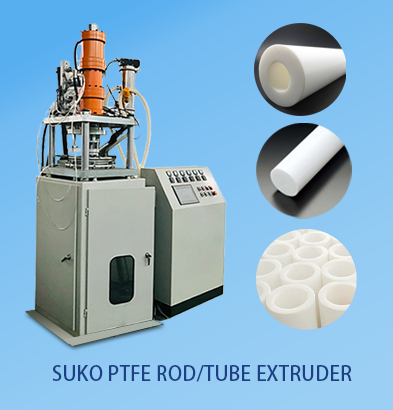
Introducing the PTFE Pipe Extruder Machine – the cutting-edge solution for all your pipe manufacturing needs! This state-of-the-art machinery revolutionizes the industry by producing high-quality, durable, and versatile PTFE pipes. The future is here, and it's time to embrace the innovation that will propel your business to new heights.
The PTFE Pipe Extruder Machine is designed with efficiency, precision, and sustainability in mind. With its advanced technology, this machine delivers flawless PTFE pipes in a fraction of the time, reducing production costs and increasing output. Its user-friendly interface ensures easy operation, while its compact design allows for seamless integration into your existing manufacturing setup.
In addition to its remarkable performance, the PTFE Pipe Extruder Machine is also environmentally friendly. By minimizing waste and utilizing energy-efficient processes, this machine promotes sustainable production practices that will benefit both your business and the planet.
Don't let your competitors get ahead – upgrade to the PTFE Pipe Extruder Machine today and experience the unparalleled benefits of this game-changing technology!
Experience the future of pipe manufacturing. Discover the PTFE Pipe Extruder Machine.
WhatsApp/phone: +86 19975113419
mail: info@ptfe-machinery.com
https://www.sukofurnace.com/
https://www.sukoptfe.com/
https://ptfe-machinery.com/
https://www.sukopolymer.com/
https://www.sukoplastic.com/
Showing posts with label tube. Show all posts
Showing posts with label tube. Show all posts
Wednesday, March 15, 2023

Tuesday, August 30, 2022
PTFE Products - Teflon PTFE Hose Pipe Tube
WhatsApp/phone: +8619975113419
mail: info@ptfe-machinery.com
https://ptfe-machinery.com/
https://www.sukopolymer.com/
Tuesday, August 16, 2022
PTFE Products - Stainless steel braided Teflon liner Tube pipe - The production process
SuKo's Stainless steel braided Teflon PTFE liner Tube pipe weaving video.
WhatsApp/phone: +8619975113419
mail: info@ptfe-machinery.com
Wednesday, August 10, 2022
PTFE Products - Teflon Super Huge Large Size Tube Rod Plate Pipe
PTFE Products - Teflon Super Huge Large Size Tube Rod Plate Pipe by SuKo
WhatsApp/phone: +8619975113419
mail: info@ptfe-machinery.com
Wednesday, August 3, 2022
PTFE Products - PTFE Teflon Tube Pipe by SuKo
PTFE Products - PTFE Teflon Tube Pipe by SuKo
WhatsApp/phone: +8619975113419
mail: info@sukoptfe.com
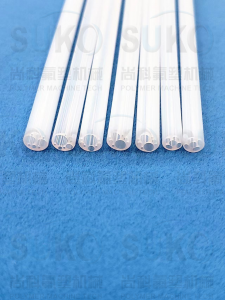
How do medical multi-lumen tubing help the fight against Covid-19
Amid the Covid-19 virus outbreak, medical PTFE multi-lumen tubing is playing an important part in helping fight the global pandemic. In this article, SuKo will explain what medical tubes are, how they’re used and why they’re helping in the fight against Covid-19.
What are medical tubes?
Medical tubes are used as part of equipment to deliver fluids to and from the body, and can also be used for catheters and respiratory equipment. Some medical tubing should be custom produced with different chambers or cores for delivering medication to the body. Medical tubing has become an essential component in the fight against Covid-19 considering the increased number of ICU patients and the increasing demands for ventilators and other respiratory equipment.
What plastic is used for a medical tube?
PTFE is one of the most commonly selected plastics for medical tubing, because it’s adaptable and can be sterilized. Other types of plastic used in medical grade tubing include more flexible materials such as PVC, TPU, TPE, and TPV, etc.
Sterilization and antibacterial properties of medical tubes
Although single-use plastic is frowned upon in everyday life, it can help prevent the spread of viruses and diseases in the medical profession, which is because it’s more hygienic to dispose of items used to treat those with highly contagious viruses rather than to re-use products.
According to medical tubing companies, medical grade plastics should be able to withstand high temperatures and corrosion for optimum cleaning in places where medical equipment is safe to be sterilized and cleaned. Some medical grade plastics can be fitted with anti-bacterial protection to help prevent the spread of contagious illnesses in hospitals and healthcare environments.
How are medical multi-lumen tubes helping the fight against Covid-19?
Medical multi-lumen tubes, key component of medical devices and respiratory equipment including ventilators which aid breathing, have been used in healthcare for many years to enhance patient care and are critical to patient care in intensive care units. As you know, one of the known symptoms of Covid-19 is shortness of breath, which results from the fact that the virus attacks the lungs and pneumonia and respiratory complications will also occur to people with severe symptoms. Therefore, thin wall medical tubing is helping keep patients affected by the disease alive.
Find out more about medical tubing here . If you have an urgent enquiry about medical grade tubing you can contact our team on info@sukoptfe.com.
Friday, July 8, 2022
Top 4 Ways to Prevent The Aging of PTFE Tubes
Nowadays, many products stand out in the development of technologies and industry, and best PTFE tube is one of these products that play an important role in various fields. But have you ever noticed the aging of PTFE tubes? The performance of PTFE tubes will also be reduced after aging. So a series of measures should be taken to prevent the aging at the later stage of the production of PTFE tubes. The aging of PTFE tubes is natural and cannot be prevented, but the only thing you can do is to slow the aging speed of PTFE tubes. To help slow down the aging rate of PTFE tubes, you should strengthen maintenance in using PTFE tubes and take a series of measures to prevent this situation. Here Suko offers you the major four methods to slow down the aging speed of your PTFE tube.
1. When choosing the sizing material of PTFE tubes, you should use sulfur curing system whenever possible. Due to the heat resistance of its vulcanized rubber, it can be modified by reducing or avoiding the use of elemental sulfur, which can minimize or remove polysulfide crosslinks and produce mainly monosulfide or disulfide crosslinks, thus slowing down the aging of teflon tubes.
2. To ensure that the material achieves the desired heat resistance, the use of peroxide is required. In this case, peroxide vulcanization produces carbon with better thermal stability and carbon cross-linking bonds. PTFE tube manufacturer also notes that you should pay special attention to other additives in the use of peroxides. For example, the choice of antioxidants needs to be more stringent, as many of them interfere with the vulcanization of peroxides. Therefore, you can also use paraffin oil, an effective additive that will not interfere with peroxide vulcanization.
3. In addition, in order to prevent the partitioning of the peroxide cation and avoid too low vulcanization of the high-pressure hose (indicated by lower hardness, lower modulus and higher compression and long-term deformation), you should use peroxide to reduce the amount of acidic filler. If possible, the addition of alkaline compounds (e.g. zinc oxide or magnesium oxide) usually improves the cross-linking efficiency of the peroxide.
4. When producing best ptfe tubes, some additives can be added, such as antioxidants, and alkaline compounds, etc., so as to improve the cross-linking efficiency of peroxides and delay the aging of teflon tubes.
Monday, May 16, 2022
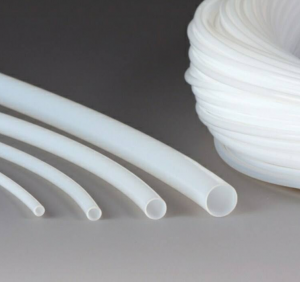
THREE COMMON PROBLEMS WITH PTFE TUBES
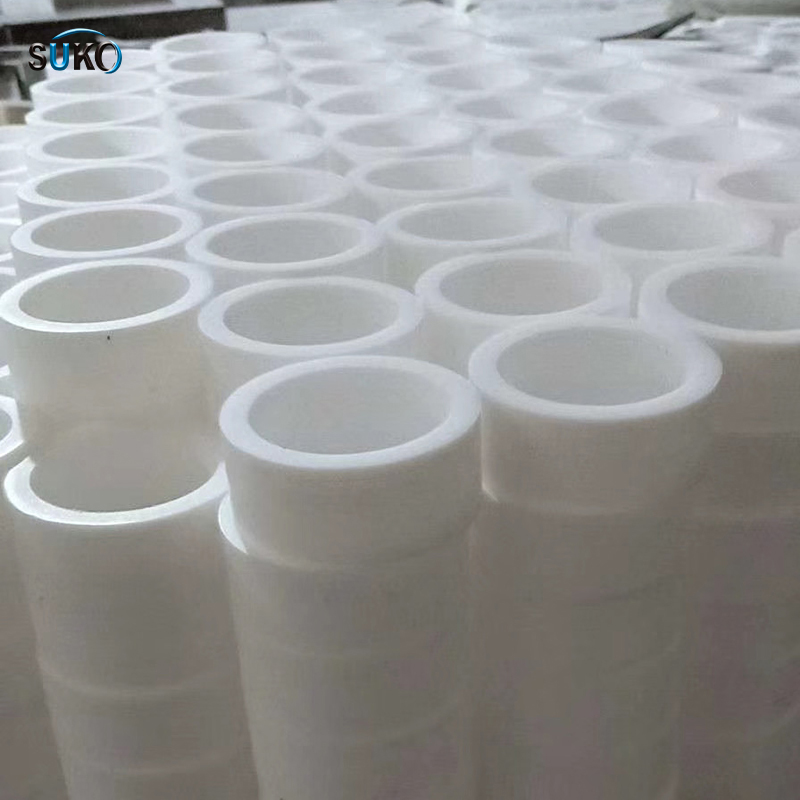
PTFE tube or Teflon tube, a semi-transparent, chemically inert and non-toxic material, has been mostly used in applications requiring resistance to high temperatures, including medical and health care, chemical, aviation, national defense, cutting-edge science and technology, and mechanical engineering, etc. One of its unique features is temperature resistance and its working temperature is from -190℃ to +260℃, so it can be used in elevated temperature applications which require high temperatures of over 200℃. PTFE tubes have very good chemical resistance to common solvents, acids, alkali and bases, and excellent dielectric insulation properties.
 |
 |
Do you meet any problems when using a PTFE tube? Here SuKo Polymer Machine Tech Co., Ltd., a well-known China PTFE tube manufacturer and exporter, explains three typical problems to help you make better use of PTFE tubes.
1. How to connect PTFE tubes?
The continuous advancement of anti-corrosion technologies and innovation of anti-corrosion materials promote PTFE to be an attractive anti-corrosion material due to its excellent chemical stability, and high temperature and chemical corrosion resistance. But PTFE material has high lubricity and non-adhesive property, making it difficult to connect PTFE tubes. To solve this problem, hot air welding method and manual flanging method can be adopted to connect PTFE tubes.
2. Precautions of PTFE tube installation
The lined plastic is soft when drilling, but it is more troublesome to force a rigid drill bit, which will easily destroy the internal steel lined plastic pipe and cause edges to be hard to be flush, so it is recommended to use a cutter to open the hole. Lined plastic residues will fall into the original PTFE tubes during the hole opening process, so you should pay more attention during the operation, otherwise it will lead to blocked end water points. No electric welding tool should be used for punching holes or installing branch pipes, otherwise lined plastic of steel PTFE tubes will be destroyed.
3. How to treat the surface of PTFE tubes?
The surface of a PTFE tube should not come into contact with aggressive materials such as oil, solvents, and corrosive materials, etc. The surface should be cleaned with water and detergent and rinsed well after staining. The use of solvents and corrosive cleaning materials is prohibited.
You may encounter other problems when use a PTFE tube except these three problems, and don’t worry. You can find SuKo and will get necessary guidance and help.
Friday, July 26, 2019
Measurement for shear viscosity spectrum of polymer melts by using screw extruder capillary
Most polymer materials are processed in the melt
state, which involves melt flow and deformation, which not only affects the
processing process itself, but also affects the final performance of the
product. Therefore, the study of rheological properties of polymer materials
has been a hot topic. Accurate measurement of rheological parameters is the
basis of in-depth study of rheological properties.
Shear viscosity is an important parameter to
characterize the rheological behavior. The so-called shear viscosity of polymer
melt is the ratio of shear stress and shear rate that melt is subjected to in
the process of flow. Polymer melt causes pseudoplastic fluid, and its flow
behavior has the characteristics of shear thinning. It is usually necessary to
use the relationship curve between shear viscosity and shear rate, namely shear
viscosity spectrum, to fully reflect the processing characteristics of polymer
melt.
The basic method of measuring melt viscosity is to try
to make the melt flow through a long and thin capillary tube, such as a round
capillary tube. The shear stress can be calculated by measuring the pressure
drop at both ends of the melt as it flows through the capillary tube. The shear
rate can be calculated by measuring the flux of melt per unit time. Thus the
melt viscosity can be obtained.
The conventional way to get the melt out of the capillary tube is to
use piston propulsion. The advantage of this method is that it USES fewer test
materials and can obtain higher shear stress. The high pressure capillary
rheometer is based on this principle [4].However, the disadvantage of this test
method is that the material cannot be tested under the actual processing
conditions, and it is difficult to obtain the rheological properties of the
polymer melt when it is processed. Especially in the study of blending
modification of several polymer materials, the polymer melt needs the strong
shearing action of screw to achieve the purpose of blending. High pressure
capillary rheometer is not suitable for testing such materials.
The screw extrusion capillary rheological test device can solve the
above problems. The device USES the propulsive force of the screw to make the
polymer melt flow through the capillary tube. Therefore, the shear viscosity of
polymer melt can be measured under conditions closer to real processing. This
method is particularly suitable for the measurement of the rheological
properties of thermoplastic materials and their mixtures. Because the
measurement simulates the real experimental environment, the obtained test
parameters can more accurately describe the behavior of materials in actual
processing.
Shear viscosity spectra of polymer melts can be measured using
specialized test instruments, such as high pressure capillary rheometers, or
combined revolutions. However, these devices are expensive and limited in
practical use, especially in the application of large-scale industrial
production. In fact, it is not necessary to rely on the special test
instrument, as long as the shear viscosity test principle, you can use a simple
small single-screw extruder and capillary mold, constitute a low-cost shear
viscosity spectrum test device. Combined with computer data processing, the
shear viscosity spectrum of polymer melt can be easily and quickly obtained. This
method is especially suitable for small and medium-sized enterprises to carry
out product development and raw material inspection.

Friday, July 12, 2019
Study on Sintering of Ptfe
From the
perspective of the three factors that determine the properties of PTFE products
-- molecular weight, crystallinity and voidage, the voidage is mainly affected
by the preforming pressure, and the molecular weight and crystallinity all
change with the different sintering conditions. Therefore, sintering process
conditions play a decisive role in the final properties of products such as
density, hardness, permeability and mechanical properties.
Wang
ping found that the sintering process of PTFE was affected by the rising and
falling speed, sintering temperature and sintering time. The larger the
product, the slower the speed of rising and cooling, the longer the sintering
time. The sintering temperature of suspension resin is higher than that of
dispersion resin. The sintering temperature of pure material products is higher
than that of filled products. In general, the rate of warming is faster than
the rate of cooling. In the same sintering furnace, pure material and filling
products cannot be mixed; Products with different sintering conditions cannot
be mixed. Products of different raw materials cannot be mixed. Taking the
production of 3-layer molded circular plate with diameter of 1 m, thickness of
20 mm, double layer as pure ptfe and middle layer as filled ptfe as an example,
the compression strength, bending strength, hardness and other mechanical
properties of the circular laminated plate produced by this technology have
been greatly improved.
Liu
xianlan studied the forming process characteristics, forming method and mold
design characteristics of PTFE, analyzed the defects and causes of PTFE
products produced by cold pressing and sintering, and put forward the treatment
methods. PTFE can be molded by a variety of preforming processes, such as
molding, extrusion, hydraulic molding, push molding and secondary processing,
and then sintered to the final product.PTFE molding is mostly made of suspended
resin. When the thickness of sheet is less than 1.5mm, disperse resin is used. Its
technological process: resin - sieve (suspension resin after pounding, loose,
and the 20 mesh mesh sieve) - press (PTFE powder loading the mould under
pressure from 20 to 35 MPa, after press compaction forming) - sintering (in 370
~ 380 "C temperature sintering in sintering furnace) - moulded products
(under free state within the mold or after cooling to finalize the design as
required by the board, rods, tubes, gaskets and packing products,
etc.).Hydraulic method is also called the equilibrium method or rubber molding
in its operating process is: put rubber bag in die - connected to the water
pump, filling the water swell the rubber bag into a cylindrical - resin evenly
join between bag and external mold mold closing - continue to gradually
increase the water pressure, water filling up to 12 ~ 13 mpa pressure
maintaining 30 min: after water - decompression, ripping, sintering, cooling is
the use of bright and clean appearance. Push is also called the paste extrusion
molding, 20 ~ 30 mesh sieve dispersion resin and organic liquid (such as
toluene, petroleum ether, the solvent oil) mixture 1:5 paste mixture,
preloading into thick wall cylinder billet, push into the compressor cylinder,
heating, with a plunger push molding, after drying in the 360 ~ 380 ° C
temperature sintering, after cooling products have strong push tube, rod,
etc.Extrusion molding can be divided into two types: screw extrusion and
plunger extrusion. The pre-sintered resin after crushing and sifted is added to
the material cylinder. Through screw rotation or reciprocating push of plunger,
the raw material is transported to the extruder at the same time of compaction.
Wang
ping studied the forming process of PTFE foam material. Suspended
polytetrafluoroethylene is used as raw material, and condensed cyclic aromatic
hydrocarbons are selected as pore-forming agent. After mixing, preforming
products are preformed and sintered. At the initial stage of sintering, drying
process is adopted to make pore-forming agent escape, and then resintering
stage is entered. Foam materials with different dielectric constants can be
prepared in different proportions to meet various requirements.
Chen xu
et al. conducted compression test and sintering test on PTFE, discussed the
relationship between density, compression strength and compression modulus, and
analyzed the compression strength of specimens under different sintering
processes, and obtained more appropriate molding pressure and sintering
process. The results showed that the compression strength of PTFE decreased
with the increase of pressing pressure, and the compression modulus increased
with the increase of pressing pressure. The molding pressure was 27.5mpa,
sintering temperature was 380 C, and the insulation time was 4h.
In order
to overcome the disadvantages of pure ptfe, such as poor abrasion resistance
and large thermal expansion coefficient, Raytheon studied the bronze-filled
particles in ptfe, and expanded the application scope of ptfe. The conventional
warm pressing molding of ptfe is characterized by long cycle, poor performance,
low dimensional accuracy and smoothness, while the warm pressing molding in
this study has fewer working procedures, short cycle and significantly improved
mechanical properties.

Thursday, June 20, 2019
What is suspended ptfe and dispersed ptfe?
Due to the different polymerization methods
of ptfe, there are suspension materials (suspension polymerization) and
dispersion materials (dispersion polymerization), namely suspension ptfe,
disperse ptfe, the processing methods of the two materials are also different.
Suspended material (suspended
polytetrafluoroethylene)
Its main forming method is die pressing
method, that is, white powder without a little additive, then die pressing
forming, sintering above its melting point temperature, and then through appropriate
mechanical processing into products, the representative products for the plate,
bar, tube, film four categories.
Dispersion material (ptfe)
PTFE fine powder prepared by dispersion
polymerization method is generally referred to as "dispersion".Because
of the fibrotic properties of this fine powder, especially at temperatures
above 20℃, it is recommended to store, transport and mix the material at 5 ~
10℃.The forming method of this kind of material is to use an auxiliary
agent (usually petroleum ether or gasoline) and powder after mixing in the
environment of 24℃ or more for about 24h (complete the crystal phase change) and then
forming, with the piston extrusion forming, drying, burning.This processing
method is commonly known as paste extrusion, also known as push.
Due to the dispersion of fine powder
particle size, divided into several grades of specifications, different
specifications have different compression ratio characteristics.Compression
ratio of less than 100, generally used to produce raw material and microporous
tape;Low compression ratio of less than 500, used to produce medium and large
specification products;500 ~ 2000 is medium compression ratio.2000 ~ 4400 is
high compression ratio material, this material is suitable for the production
of thin wall thin line, can continuously large length and high efficiency
production.
Identification method: the main difference
is the particle size of the two are not the same.Suspension material is coarse,
dispersion material is fine.


Tuesday, June 18, 2019
SUKO is attending a manufacturing expo in Bangkok
Are you still worried
about semi-automatic machines on the market? Are you still anxious about
the equipment for Polymer/PTFE/UHMWPE products? This is a good opportunity now!
SUKO is attending the Manufacturing
Expo(ME) in Bangkok, Thailand on June19-22, 2019. ME is an event dedicated to
machinery and technology for manufacturing and supporting industries, It fully
reflects the level of machinery manufacturing and mechanical equipment
development in Asian.
Here are some popular products we
produced: Auto extrusion/bush molding machine, Auto Gasket Machine,
UHMWPE Rod Extruder, PTFE Tube Extruder, etc. They are all automatic
machines, which help customers improve productivity and quality. These products
also have longer working life and are friendly to environment.
The specific marketing advantages are as
follows:
ü PTFE
Automatic Press Molding Machine-It is suitable for pipe and rod, it has PLC
control and screen touch system. Furthermore, if
PTFE powder is exhausted, it will
alarm Automatically.
ü Auto
Gasket Machine-It has advantages of environmental protection, time saving, high
efficiency, long service life, good heat dissipation and good quality of
accessories.


Come to this event, Here are the newest
innovations and solutions by 2,400 brands from 46 countries.
Come to our booth, We have professional
and technical personnel to solve your problems immediately. What’s more, plenty
of advanced and complete equipment for your choice, such as PTFE AutomaticPress Molding Machine, Auto Gasket Machine, UHMWPE/PTFE Rod Extruder and
so on. In addition, at the international exhibition, you can consult a wide
range of topics for your needs, or compare a large amount of manufacturers to
select your favorite devices.

Detailed exhibition
information is as follows.
Time:June
19-22, 2019
Address:Bangkok
International Trade and Exhibition Centre,
88 Bangna-Trad Road (Km.1), Bangna,
Bangkok 10260, Thailand
Booth Number:3D34
We sincerely hope to establish long-term
cooperation with you, we will try our best to provide high quality and
excellent service, we will cherish every opportunity to cooperate with you!
Looking forward to your visit!
Tuesday, June 11, 2019
Introduction to ptfe teflon pipes
Ptfe teflon tube extrusion machine is divided
into many kinds, exactly say ptfe
tube forming process has push and pressure method, extrusion method, hydraulic method, welding
method, winding method, etc., which is mainly push and pressure
method.Generally dispersed PTFE resin with particle size of 500 microns and
apparent density of 0.45g/ml ~ 0.55g/ml is adopted.The small diameter tube
chooses the compression quite big resin, the medium and large diameter tube
chooses the compression quite small resin.Extruder usually choose 200 and 260
solvent oil.PTFE thermal shrinkage tube, PTFE spiral tube, PTFE steel wire
reinforced hydraulic tube and so on can be produced by the secondary processing
of PTFE tube.
1.1 common ptfe teflon pipe
Ptfe ordinary tube is made of ptfe
dispersion resin at room temperature with organic solvent as extruder, and then
through drying and sintering.According to the size of the pipe diameter can be
divided into two types of ordinary pipe and micro pipe.Ordinary tube inner
diameter > 4mm, micro tube inner diameter ≤4mm.
Typical formula for PTFE tube production:
Dispersed PTFE resin: 100 (weight)
Extruder: 18 ~ 24
Production process:
PTFE, extruder - mixing - pushing -
pressing - drying - sintering - cooling - products.
Production process parameters:
Mixing: temperature ≤19 ℃, time 10min
~ 20min, mixed at 25 ℃ ~ 30 ℃ for more than 24h.
Blank: compression rate is about 50mm/ min,
pressure is 0 ~ 3MPa.
Pushing pressure: the cavity temperature is
30 ℃ ~ 50 ℃, and the die temperature is 50 ℃ ~ 60 ℃.
Drying: under 210 ℃,2h ~ 3h
Sintering: batch sintering, temperature
rise rate of 60 ℃/ h,375 ℃±5 ℃ insulation for 4h.
Continuous sintering, dry area 100 ℃ ~ 250 ℃, preheating
area 250 ℃ ~ 330 ℃, sintering area 380 ℃ ~ 420 ℃, cooling area less than 300 ℃.
Main equipment: mixing machine, preforming
machine, vertical pushing press, drying and sintering furnace.
USES: as insulation and fluid conduit.
1.2 polytetrafluoroethylene heat-shrinkable
tube
PTFE thermal shrinkable tube has the
property of being heat-shrinkable, so it can be tightly coated on the surface
of other workpieces, making the workpieces resistant to corrosion, electrical
insulation and viscosity.Widely used in electrical, chemical, mechanical,
printing and other industries.The maximum shrinkage of PTFE shrink tubes is
reported to be more than 75%.
It is processed by disperse PTFE resin. The
principle is that PTFE is subjected to stress during processing and produces
forced high-elastic deformation, which is reversible and freezes at low
temperature. If the forced high-elastic deformation is reheated, it will
gradually disappear and return to the original state.
Typical formula for PTFE thermal shrinkable
tube production:
Disperse PTFE resin 100 (weight)
Extruder 20 ~ 22
Production process:
PTFE resin, extrusion aid → mixing → storage → pre-molding
→ pushing and pressing → drying → sintering → cooling → heat treatment → blowing → cooling → product.
Production process parameters:
The front part is the same as ordinary PTFE
tube.
Heat treatment: the quenching process of
the dried and sintered pipes after further full sintering at high temperature,
the temperature is 390 ℃±2 ℃, and the coolant is -5 ℃.
Blowing: at 310 ℃ or so, fill
the compressed gas below 0198MPa, the blowing rate is 200% ~ 400%.
Main equipment: blowing machine, other PTFE
tube and the same.
1.3 ptfe teflon steel wire reinforced hydraulic
pipe
The common PTFE pipe will break under the
pressure of about 40kg/ cm2. When it is combined with steel wire, the pressure
resistance will be greatly improved. The maximum working pressure abroad
reaches 700kg/ cm2.The results show that the compressive strength and pulse
strength of the hose are related not only to the steel wire strength but also
to the weaving Angle.When the braiding Angle is 54°44 "for single-layer
braiding, the steel wire does not extend under internal pressure, the length
and diameter of the hose do not change, and the pressure resistance is the
best.
When used as hose for hydraulic system in
aviation industry, in order to prevent electrostatic breakdown of inner tube
caused by hydraulic oil flow, trace conductive carbon black should be added in
the manufacture of PTFE inner tube.However, it was found that adding carbon black
could not completely prevent electrostatic discharge from passing through the
tube wall and increase the gap.
In the 1960s, Attas manufactured composite
tubes, in which the inner layer of the tubes was a uniform mixture of
conductive carbon black and PTFE, and the outer layer of the tubes was pure
PTFE.This form of tube body layer has axial conductivity, so it can not only
eliminate static electricity, but also prevent seepage.
The process:
Inner resin (including conductive carbon
black), outer resin → blank → pushing → drying → cooling → testing → weaving → fitting joints → testing.
PTFE steel wire composite hose is mainly
used in aircraft hydraulic system, air conditioning system, fuel system,
lubricating oil system.In civil industry, it is suitable for soft connection of
hydraulic pressure, steam pressure and steam transportation in rubber, plastic,
pharmacy, clothing, shipbuilding, automobile, machine tool, motor, diesel
engine and paper making industries.
PTFE spiral tube, also known as PTFE
flexible hose, has not only all the excellent properties of PTFE, but also
flexible properties.At present, there are two kinds of PTFE spiral tube and
chemical fiber, stainless steel wire and plastic coated glass fiber woven
reinforcement.
It is made of PTFE through secondary
processing. The process is that PTFE thin-walled tube continuously rotates
forward through a combination mold with a temperature of 270 ℃ ~ 280 ℃ at a
certain speed.
It
is mainly used for the inlet and outlet pipes of the shock parts such as the
soft connection dislocation connection, serpentine pipes, pump engines and so
on.Used for shielding cable and protecting cable sleeve of aircraft engine.
Subscribe to:
Posts (Atom)