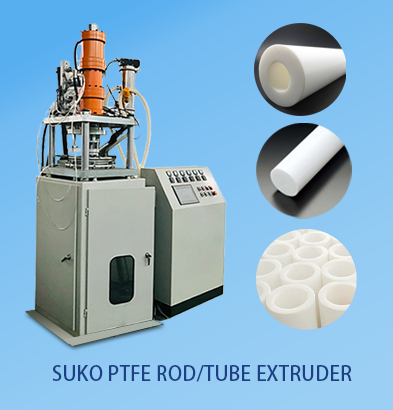
Introducing the PTFE Pipe Extruder Machine – the cutting-edge solution for all your pipe manufacturing needs! This state-of-the-art machinery revolutionizes the industry by producing high-quality, durable, and versatile PTFE pipes. The future is here, and it's time to embrace the innovation that will propel your business to new heights.
The PTFE Pipe Extruder Machine is designed with efficiency, precision, and sustainability in mind. With its advanced technology, this machine delivers flawless PTFE pipes in a fraction of the time, reducing production costs and increasing output. Its user-friendly interface ensures easy operation, while its compact design allows for seamless integration into your existing manufacturing setup.
In addition to its remarkable performance, the PTFE Pipe Extruder Machine is also environmentally friendly. By minimizing waste and utilizing energy-efficient processes, this machine promotes sustainable production practices that will benefit both your business and the planet.
Don't let your competitors get ahead – upgrade to the PTFE Pipe Extruder Machine today and experience the unparalleled benefits of this game-changing technology!
Experience the future of pipe manufacturing. Discover the PTFE Pipe Extruder Machine.
WhatsApp/phone: +86 19975113419
mail: info@ptfe-machinery.com
https://www.sukofurnace.com/
https://www.sukoptfe.com/
https://ptfe-machinery.com/
https://www.sukopolymer.com/
https://www.sukoplastic.com/
Showing posts with label extruder. Show all posts
Showing posts with label extruder. Show all posts
Wednesday, March 15, 2023

Wednesday, February 1, 2023
Suko Paste hose pipe extruder extrusion machine for the production of ho...
Suko ptfe plastics Paste hose pipe extruder machine. Mainly used for the production of hoses, pipes, medical piping catheter tubing.
WhatsApp/ phone: +8619975113419
mail: info@ptfe-machinery.com
https://ptfe-machinery.com/project/polymer-plastic-ptfe-paste-hose-extruder-machine/
https://www.sukopolymer.com/ptfe-plastic-paste-extruder-machine/
Tuesday, July 12, 2022
Monday, May 16, 2022
THREE COMMON PROBLEMS WITH PTFE TUBES
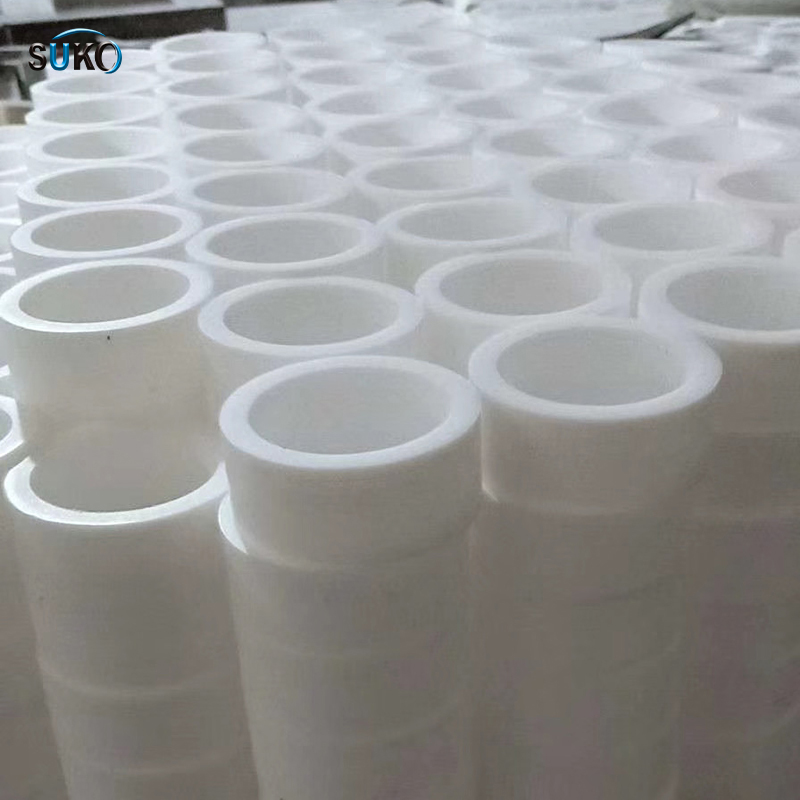
PTFE tube or Teflon tube, a semi-transparent, chemically inert and non-toxic material, has been mostly used in applications requiring resistance to high temperatures, including medical and health care, chemical, aviation, national defense, cutting-edge science and technology, and mechanical engineering, etc. One of its unique features is temperature resistance and its working temperature is from -190℃ to +260℃, so it can be used in elevated temperature applications which require high temperatures of over 200℃. PTFE tubes have very good chemical resistance to common solvents, acids, alkali and bases, and excellent dielectric insulation properties.
 |
 |
Do you meet any problems when using a PTFE tube? Here SuKo Polymer Machine Tech Co., Ltd., a well-known China PTFE tube manufacturer and exporter, explains three typical problems to help you make better use of PTFE tubes.
1. How to connect PTFE tubes?
The continuous advancement of anti-corrosion technologies and innovation of anti-corrosion materials promote PTFE to be an attractive anti-corrosion material due to its excellent chemical stability, and high temperature and chemical corrosion resistance. But PTFE material has high lubricity and non-adhesive property, making it difficult to connect PTFE tubes. To solve this problem, hot air welding method and manual flanging method can be adopted to connect PTFE tubes.
2. Precautions of PTFE tube installation
The lined plastic is soft when drilling, but it is more troublesome to force a rigid drill bit, which will easily destroy the internal steel lined plastic pipe and cause edges to be hard to be flush, so it is recommended to use a cutter to open the hole. Lined plastic residues will fall into the original PTFE tubes during the hole opening process, so you should pay more attention during the operation, otherwise it will lead to blocked end water points. No electric welding tool should be used for punching holes or installing branch pipes, otherwise lined plastic of steel PTFE tubes will be destroyed.
3. How to treat the surface of PTFE tubes?
The surface of a PTFE tube should not come into contact with aggressive materials such as oil, solvents, and corrosive materials, etc. The surface should be cleaned with water and detergent and rinsed well after staining. The use of solvents and corrosive cleaning materials is prohibited.
You may encounter other problems when use a PTFE tube except these three problems, and don’t worry. You can find SuKo and will get necessary guidance and help.
Friday, August 30, 2019
Chemical recycling of waste polymer materials
Chemical cycle is one of the important
methods of polymer material cycle, which refers to the degradation reaction of
polymers under the action of heat and chemical reagents to form low-molecular
weight products, which can be further utilized, such as monomer
repolymerization, oil products can be further processed. At present, the main
methods of chemical cycle are chemical degradation. Chemical degradation can be
divided into depolymerization, pyrolysis, hydrogenation and gasification.
The present situation of chemical cycle
development of polymer materials
1.
Step - by - step polymer
material
The progressive polymer materials mainly include polyester
and polyurethane, which are represented by polyethylene terephthalate. Mainly
used for film, fiber and fabric, beverage bottle, etc. Waste materials can
react with polyols in the presence of catalysts and the products can be
condensed with unsaturated polyacids to make unsaturated polyresin. Different
esters can be obtained by alcoholysis with different alcohols, either as
monomers or as plasticizers. PET can be hydrolyzed under acidic or alkaline
conditions. It can be hydrolyzed under normal pressure in strong acid (such as
sulfuric acid and nitric acid) medium. The hydrolysis rate is fast. If it is
hydrolyzed in an aqueous solution of alkaline (such as NaOH), 3-sh should be
reacted at 21 2500C and 1.4-2.0mpa. After the reaction, TPAO weak alkali (such
as hydrogen and oxygen) can be precipitated, and can also be used to hydrolyze
PET waste to obtain monomer. Saponification reaction under atmospheric pressure
has been applied in silver and TPAO polyurethane is from recycled PET film
condensation polymer materials, can be hydrolyzed into the pluralistic alcohol
and amine, with a special extruder hydrolysis, dibasic acid can be obtained by
the purification of the product and diamine, diamine and reaction with
phosgene, preparation of diisocyanate, used for foam production. But the cost
of this process is large and the recovery benefit is not high. PU alcoholysis
is a widely used method at present. PU waste materials can be alcoholyzed to
obtain polyol mixture, which cannot be separated effectively at present, but
this product can be used as a component in the manufacture of foam plastics and
elastomers.
2.
Additive polymer material
Polystyrene (ps) in addition to used as paint, binder, but
also used to crack styrene ps under the action of heat can be cracked into
styrene, the yield of 65%, above. Japanese scientists have cracked PS in
solvent method, decomposed it at 400 to 500 ℃ for 1 20min, and
the condensate obtained can be distilled into styrene with a purity of 96%.High
purity styrene can be obtained by fractionation using metal oxide as catalyst
in melting state (>350 ℃).In addition, lead alloy is used as heating medium to crack ps. Under
the action of appropriate catalyst or irradiation, polyolefin can undergo
chemical reactions to form materials with good performance, such as
polyethylene (PE), which can be crosslinked with crosslinking agents (such as
peroxides) to produce PE materials with good performance. Waste polyolefin can
be chlorinated, and the chlorinated polyolefin can be used in binders and
coatings. In addition, polymer polymerization to make oil is a common cycle
method.
3.
Hybrid polymers and composites
A common method of making use of a variety of polymer
mixtures is cracking them to make oil. The mixture is cracked at high
temperatures to produce gas and oil, which can be used as fuel or refined
directly at the refinery. Chemical plants have high requirements on the
organochlorine content of oil, generally no more than 10 * 10-6. However, the
organochlorine content of oil obtained from cracking of plastic mixture can
reach (50 to 200) * 10-6, so it is very important to dehalogen before cracking
or during cracking. In addition, waste plastics often contain heavy metal
element compounds, cracking oil refining to consider the poisoning of the
catalyst. Most of the resins of composite materials are thermosetting resins
such as unsaturated polyvinegar resin, epoxy resin and phenolic resin, etc. The
waste materials of composite materials are not only used as powder filler,
combustion to take heat and chemical auxiliary fuel, but also used for cracking
and recycling oil products and raw materials. For example, after the
decomposition of glass fiber reinforced plastics at 380 ℃ at
atmospheric pressure of 50 ℃, the further decomposition at 450 ℃ and 550 ℃ can obtain
oil products. Due to the large amount of residue, a special decomposition
furnace needs to be designed to complete the pyrolysis process, and the
research work is still under way. Another example is the pyrolysis of phenolic
resin in the experimental vulcanization bed (722 ℃), the products
include aliphatic hydrocarbon (mass fraction is 5 · 24%),
phenol (8, 25%), carbon black (42).2%), gas (24, 3%), etc.
Chemical cycle process and equipment
1.
Reaction Still
Reaction kettle is a common chemical
equipment for chemical circulation, and its matching equipment is condenser,
storage tank, distillation tower, etc. The products of raw materials (such as
polyolefin) degraded in the reaction kettle can be monomer, chemical raw
materials, etc., such as PET pyrolysis and then polymerization into PET, or
unsaturated polyvinegar resin can be produced. According to the demand, the
reactor can be designed into a tank reactor to facilitate heating and slag
removal. The reactor can also be designed as a tubular reactor, which can
increase the cracking temperature, shorten the time, and continuously crack,
suitable for the cracking of ps, PMMA and other polymers.
2.
Fluidized bed reactor
Fluidized bed reactor is a kind of
bed reactor. W. kanaminsky et al., Germany, used propane combustion to heat
carrier gas or water vapor, and used heater to heat sand and carrier gas to 500
° c at 00 ° c. The carrier gas should be enough to promote sand fluidization in
the reactor. The polymer is squeezed into the fluidized bed by the extruder,
and the polymer material is cracked in the fluidized bed. The resulting gas and
carrier gas are separated by condensation and separation, and the pyrolysis
products are obtained. Fluidized bed cracking apparatus has the advantages of
fast heating, high efficiency, even cracking temperature and closed system. Cracking
reaction is best carried out under inert carrier gas. If air is used as carrier
gas, the product is easy to be oxidized and the thermal energy of the obtained
oil is 10700 lower.
3.
Extrusion cracking equipment
Extrusion cracking equipment is
composed of two extruders in series. The first extruder has a vent hole. The
waste polymer materials were cracked at low temperature on the first extruder.
The main purpose was to remove HCI from the waste materials. The intermediate
products of cracking are then entered into the second extruder for
high-temperature cracking, which turns the polymer into a low-molecular
compound or oil or gas. After separation, HCG cracking reaction can be carried
out continuously, which can be decomposed mechanically and thermally. In
addition, new devices are being researched and developed.


Tuesday, August 27, 2019
Extrusion process of PTFE insulated wire
Ptfe is one of the types of fluorine plastic, used for processing and
insulation layer, as a result of ptfe in melting point 327 ℃, and higher than the
melting point 360 ℃ using disposable push extrusion sintering
molding methods, process is more complex, process quality control involves many
factors, once the control is not good, can make the extrusion process to or
appear all sorts of quality problem; Once the extrusion and sintering are not
successful, it will cause the material part or all scrap, ptfe price is
expensive, so it has caused a big waste. Therefore, it is necessary to control
the extrusion process of ptfe reasonably, comprehensively and effectively,
which is a necessary condition to ensure product quality and reduce waste.
Based on the application and processing practice of ptfe material in
electric wires and cables and the practical experience, the paper gives a brief
overview of ptfe insulation extrusion process, hoping to help production
technicians to make correct selection and control in ptfe extrusion process.
Technological process:
1.
Sieve F4 powder
Ptfe powder is
the powder particles after polymerization, soft, strength is very small, when
in packaging container stored easily by weight or turbulence vibration in
transit in the cluster, blending uneven phenomenon, so before mixing must adopt
certain specifications of the mesh screen to sieve of ptfe powder, filter out
larger knot cooking starch material, the specifications of the mesh screen in 8
and 12 mesh is advisable. If the agglomeration is serious, the powder should be
placed in a lower temperature, after a period of time, if the agglomeration
shows signs of loosening, then screening. The powder should be stored in a low
temperature environment, and should be handled gently in the process of
handling, so as to avoid severe agglomeration of ptfe powder and it cannot be
used. In addition, environmental hygiene should be ensured and impurities or
dust should not be mixed into ptfe powder. Due to the strong electrostatic
adsorption of ptfe powder, it is easy to adsorb air or small impurities and
dust around, so to keep the environment clean without dust, the packaging
container surface should be clean before opening the cover
2. Toner or pulp
treatment
When insulation needs coloring for identification, a certain proportion
of toner or slurry should be added to ptfe powder. Toner is after fine grinding
of high temperature resistant organic or inorganic pigment powder, easy to
absorb moisture, agglomeration, so in advance should be heated treatment,
remove moisture, and screen, filter out the larger particles. Generally, 180
and 200 mesh screen specifications are appropriate. If the screen screen is
smaller than 180 mesh, then the pigment particles after filtering are larger,
which is not conducive to the insulation performance of the insulation layer. The
screen mesh is more than 200 mesh. Although the insulation performance of
insulation layer is guaranteed, it is difficult to filter. Color paste is a
mixture of toner and oily liquid, toner in oily liquid suspension state, but
stationary for a period of time will precipitate, so before use should be
shaken and mixed, so that the precipitate toner particles evenly suspended in
oily liquid for use.
3. The
ingredients
Batching is an
important preparation before mixing, according to the ratio of
polytetrafluoroethylene powder and extrusion aid, or color powder or color
paste ready, after the mixture.
There are more
kinds of extruder, such as yan 20 aviation gasoline, toluene, petroleum ether,
or other volatile solvent oil, organic solvent, etc., different extruder
volatilization speed is different, according to the actual situation of the
equipment, extrusion speed to choose the appropriate extruder. The extrusion
assistant volatilizes too fast, although it can shorten the drying time and
improve the extrusion speed, it requires strict operation time for the
preparation before extrusion, and the preparation operation time should not be
too long, otherwise the extrusion assistant of the blank will be ineffective
due to excessive volatilization .Extruder is too slow to evaporate, and
although there may be sufficient preparation time, the drying time must be
extended or higher requirements for the equipment capacity are required. The
proportion of extruder should be 18% and 23%, and should be adjusted according
to the specifications of the conductor, insulation layer thickness, extrusion
speed and extrusion pressure. Generally, the wire specification is larger, the
insulation thickness is thicker, the extrusion speed is faster, the compression
is smaller, the proportion of the extruder can be appropriately small; On the
contrary, the wire specification is smaller, insulation thickness is thinner,
extrusion speed is slower, compression is larger, the proportion of the
extruder can be appropriately larger.
Toners cost less
and are still commonly used today. Using pigments to dye, teflon insulation
dispersion in toner as paste, toner and ptfe powder is dry mixing, and toner
additives and relatively little, easy to cause mixing cluster, dispersion is
poor, is not easy to mix, will lead to serious existence chromatism different
part of insulation, so its size as small as possible when choosing toner
requirements, general imported toner quality is better. In the toner mixing,
should choose the pigment powder temperature tolerance above 400 ℃, otherwise after high
temperature sintering (sintering temperature generally basic in 350, 400 ℃) may appear the product
fading phenomenon. Generally, inorganic pigments have good high-temperature
resistance, while organic pigments have poor high-temperature resistance.
Therefore, the use of inorganic pigments as toner is more reliable, but its
environmental protection is poor. The matching ratio of toner is generally not
more than] %, in the actual production can be according to the type of toner,
toner quality, color requirements, insulation layer thickness, etc.
Although the cost of color paste is high, it is conducive to the
uniformity of the mixture and is an ideal choice, which can effectively ensure
product quality, simple operation, high efficiency and less waste. When mixing
the color paste, the color paste can be added to the extrusion aid and premixed
evenly. Due to the relatively large amount of extruder, it is wet mixed with ptfe
powder, so there is no problem of toner agglomeration, and the dispersion is
very good, it is easy to mix evenly. The proportion of color paste is generally
between 0.3% and 0.5 ‰, with 3 ‰ being the majority. Only a few special cases
require the proportion of 0.5 ‰.When the insulation layer edge layer thickness
is relatively thin, the proportion of color paste should be appropriately
increased by 0.1%, 0.2.
4. The mixture
Mixing is to mix
polytetrafluoroethylene powder with extrusion aid, or color powder or color
paste evenly, to ensure that the extrusion insulation lubrication and color
uniformity. In order to facilitate uniform mixing, the volume of general mixing
bottle (wide mouth bottle) is appropriate to 4, 5 liters, the loading quality
is about 800, 1 000 g, the loading volume accounts for about 2/3 of the mixing
bottle volume is good, so there is enough space for mixing.
The natural
color mixture (mainly used to extrude the insulation of radio frequency cable)
does not need to add toner. When mixing, put ptfe powder into mixing bottle
first. Used in to make people try not to contact with mixing bottle of bottle
wall, in person to squeeze aid available clean sheet tool will gently mixing in
a bottle the center of the surface of ptfe powder to bottle wall, make its
surface center to form a depth of about 2, 3 c of conical hole, then people
directly used in a certain proportion in the taper hole; After that, the mixing
bottle shall be capped and strictly sealed to prevent the extruder from
volatilizing. Firstly, the mixing bottle shall be shaken and mixed manually for
no less than 5 minutes, and then the mixing bottle shall be placed on the
mixing machine to swing and roll for more than 30 minutes until the mixing is
even.
5. Compact
The effect of pressing (material) billet is to press loose porous
polytetrafluoroethylene powder into a relatively compact material billet,
eliminating the pores and air contained in it for extruding use. Generally
should be in the environment of 20 ℃ above the blank pressing, will be homogenized
powder slowly pour into the pressure cylinder cylinder, at the same time should
ensure that the heart rod and pressure cylinder cylinder concentric, and gently
shake the pressure cylinder in the material surface, and then add pressure cover
on it. The pressure should be appropriate, too much or too little will affect
the extrusion quality. If the pressure of the blank is too large, the extruder
is easy to be overpressed, and the lubrication performance during extrusion is
reduced, the extrusion pressure is increased, and the shear stress of the
material is larger, leading to excessive fibrosis, which is not conducive to
the stability of the outside diameter of the extrusion insulation, and the
shrinkage rate of insulation sintering is larger, which is also easy to cause
insulation cracking.
6. Squeeze out
The preparation
work for ptfe insulation extrusion mainly includes selection of compression
ratio, preheating and heating of extrusion cylinder and die, adjustment of
needle gap between die sleeve and die core, charging blank, conductor
inspection, conductor piercing, adjustment of thread tension, combination
sealing of machine head and extrusion cylinder, etc., which will be introduced
in the following.
The compression
ratio of different brands of ptfe powder during extrusion is also different. the
proper compression ratio should be determined according to the properties of
ptfe powder to ensure the process performance and quality during extrusion. Extrusion
compression ratio refers to the ratio between the annular area of the extrusion
die and the annular area of the blank. Generally, extruder cylinders are
divided into three sizes: small, medium and large. The diameter of small
cylinder is about 38 mm, medium cylinder is about 50 mm, and large cylinder is
about 65 mm.In the actual production, the specifications of the extruder
cylinder should be selected according to the sectional area of the extruder
insulation layer.
The extrusion should be according to the specifications of the
corresponding matching mold and according to the location of the assembly, and
the mold sleeve bearing line neck population and needle tube between the
distance (gap) to the appropriate position. Too large or too small clearance
will affect the quality of the extruded insulation layer. If the gap is too
small, the velocity of extrusion of ptfe material to the outside of the mold
will be accelerated, and the material will be excessively cut, leading to
excessive fibrosis, resulting in the decrease of the transverse strength of
insulation layer, the product is prone to longitudinal cracking or internal
cracks of insulation, and the insulation and conductor coating is not tight
(there is "loose cover").The gap is too large, will make ptfe
material to the outside of the mold extrusion velocity slow down, material
pressure on the conductor increases, often occur extrusion instability or cause
conductor compression rolling and produce "pine" problem, and the
conductor can not pass through the needle plug phenomenon.


Monday, August 26, 2019
Extruder Screw Design
The single most important mechanical element of a screw extruder is the screw.The proper design of the geometry of the extruder screw is of crucial importance to the proper functioning of the extruder. If material transport instabilities occur as a result of improper screw geometry, even the most sophisticated computerized control system cannot solve the problem. Screw design is often still considered to be more of an art than a science. As a result, misconceptions about certain aspects of screw design still abound today. Since the theory of single screw extrusion is now well-developed, the design of screws for single screw extruders can be based on solid engineering principles. Thus, screw design for single screw extruders should no longer be an art, but a science based firmly on the principles of polymer processing engineering.
Unfortunately, people involved in screw design are not always up-to-date on extru-sion theory. As a result, many extruder screws in use today perform considerably below maximum possible performance, solely because of improper screw design.An example is the still-common use of the square pitch extruder screw. This is ascrew with constant pitch with the pitch being equal to the diameter of the screw;this pitch corresponds to a helix angle of 17.66. It can be demonstrated quite easily that the square pitch is far from optimum with respect to melting and melt convey-ing for a number of polymers. This fact has been known since the early 1950s, yet most extruder screws in use today still use the constant square pitch design.
A factor that may have contributed to the state of affairs in screw design is that there has not been a comprehensive text dealing with screw design. The objective of this chapter is to demonstrate how extrusion theory can be used to properly design extruder screws. Hopefully, this will provide a solid foundation, based on engineer-ing principles, from which better and more effective screw designs can be developed in the future. The principles of screw design are not only important in designing new extruder screws, but also in the analysis of processing problems of an existing extrusion line. It is important to be able to recognize whether a problem is related to poor screw design or to another part of the process. Thus, knowledge of the basic principles of screw design is important to essentially every person involved with extruders.

Friday, August 23, 2019
Development of key technology of coaxial twin screw extruder
1.
Spiral groove depth
The depth of screw
groove is an important parameter of the twin - screw extruder. Usually it is
expressed indirectly by the ratio of screw diameter and screw root diameter.
The value is an important parameter to indicate the technical level of the twin
screw extruder. At present, the ratio of the external diameter of the screw to
the root diameter of the screw in the latest generation (sixth generation)
coaxial twin-screw extruder represented by WP of Germany is D/Di = 1.55.There
are many factors limiting D/Di, in addition to the center distance of the
gearbox output shaft of the driving screw, the screw itself also has a greater
impact on D/Di: such as the shear resistance of the screw mandle-shaft, the
torque transfer mode between the screw element and the mandle-shaft, the
structure of the screw element itself, etc.
(1)
The breakthrough in material
selection, processing technology and heat treatment performance of mandrel
makes the torque capacity of mandrel bearing greatly improved, and the
length-diameter ratio of screw increases from the initial 36 to 50, or even
higher.
(2)
The technological breakthrough
of the special gear drive system of the co-directional twin-screw extruder
provides the power transmission guarantee for the torque input required by the
deep groove screw under the condition of the constant center distance, making
the screw D/Di goes to 1.55.
(3)
The torque transfer mode
between screw and mandrel is the key to realize the deep screw groove. The
torque transfer between the screw element and the mandrel was initially connected
by flat keys, which not only limited the deepening of the screw groove and
increased the free volume of the screw, but also the strength of the flat keys
could not meet the requirements of some production operations. Using multi -
key torque transmission in the form of involute can greatly improve the depth
of the screw groove under the same outer diameter of the screw. In recent
years, while learning from foreign advanced technologies, China has made great
breakthroughs in processing and manufacturing. At present, it has been able to
manufacture involute spline structure with the same connection form with
foreign screw, thus making great breakthroughs in the depth of screw groove.
(4)
The breakthrough of element
structure. The structure of the kneading block solves the key technology of
manufacturing, its structure changes from the original single piece type, the
assembling type to the present integral type, thus guarantees the deepening of
the screw groove from the strength of the element, also makes the adjustment of
the screw combination and the assembly of the screw more reliable and
convenient.
To sum up,
breakthroughs in the aspects of gear transmission system, shear strength of
mandrel, torque transmission form of screw element and mandrel, and design and
manufacture of screw element ensure the successful development of a new
generation of high-speed and deep screw slot extruder.
2.
New screw element
Synthetic twin screw
extruder is the core part of the screw, after the advent of synthetic double
screw extruder, and development of screw and screw element has always been a
developer research and the main direction, screw structure from the integral
development early to "building block", three thread from single head
to head, later when the double structure, type of screw elements, structure and
function differences. Develop self-cleaning type mixer type screw element, edge
type mixer type screw element, toothed screw element, pressure regulating screw
element, etc., of the twin screw extruder screw element made greater
innovation, supplement and perfect, strengthen and improve the direction of the
twin screw extruder mixing and plasticizing effect, dispersion, shear,
pressure, and adjustable.
3.
Gear box torque rating
parameters
The torque grade
parameter M/A3 of the gear box is an important performance indicator parameter
of the coaxial twin-screw extruder. Its value represents the technical level of
the coaxial twin-screw extruder and represents the torque output capacity of
the gear box under a certain screw center distance. Due to the particularity of
the transmission form of the coaxial twin-screw extruder, the torque of the
gear is input into the gear box by a high-speed shaft. Through deceleration and
torque distribution, the torque is transmitted to the twin-screw by two output
shafts with limited center distance under the condition of great axial force. Therefore,
the ratio parameter M/A3 between the center distance of the output shaft and
the output torque has become an important symbol to measure its technical level.
So the design of gear box of twin screw extruder is very difficult compared
with the design and development of general gear transmission system. At
present, China has made great breakthroughs in gear transmission mode, torque
uniform distribution and axial force solution. The torque grade parameters of
the experimental extruder have been changed from 4.Seven goes up to eight.8. It
lays a good foundation for the development of high speed and high torque gear
box of production extruder.
In terms of the
service life of the gear box, by improving and driven by new type of
multi-channel way, not only greatly improve the transmission capacity, and
through the reasonable arrangement of the axis, solved the gear and thrust
bearing load distribution, greatly reduced the gear drive and work process of
the additional force, making long-term restricting the service life of the gear
box of the anti-fatigue performance of the gear, thrust bearing system
performance are greatly improved, after adopts multiplex drive, output the
stress of the bearing diameter of axle direction decrease greatly, therefore,
in many ways to improve the gear, the thrust bearing system, the torque
distribution part of the bearing service life, Designed life up to 10 a.
4.
Screw speed
Screw speed is
another important parameter to measure the performance grade of the extruder
with the same direction and it is an important way to improve the performance
index of the extruder. It directly affects the torque grade parameters and
production capacity of the equipment. The screw rotation speed increase mainly
depends on the innovation and development of gear transmission system drive,
the ability of the screw torque under and anti-fatigue performance, by
developing a new type transmission way and optimize the innovation design,
selection of key parts imported bearing, means, the strict screening of screw
spindle materials and the improvement of heat treatment process, and the screw
element and spindle, involute spline breakthrough made in the form of uniform
stress distribution, making it possible to screw rotation speed increase, has
been in a small high-speed experimental synthetic twin-screw extruder machine
through industrial test.
5.
Production capacity
The technical level
and performance of the equipment are aimed at improving production capacity,
reducing energy consumption and improving reliability. Production capacity is
the main factor to evaluate the performance of a unit:
(1) improve the screw
speed, the same type of production can be doubled;
(2) the use of deep screw
groove screw, increase the screw free volume, improve the unit speed and unit
time transport capacity;
(3) the use of twin screw and gear pump combined
technical route, improve the reliability of the transmission box, reduce the
axial force borne by the gear, eliminate the limit of the axial force to reduce
the output of the factor, improve the output of the extruder.

Wednesday, July 31, 2019
Molding method for PTFE by mould pressing
The
crystallization melting point of PTFE is 327℃, but the resin
cannot be in the melting state until it is above 380℃, and the
melt viscosity is as high as 1 010 Pa*S. In addition, PTFE has strong solvent
resistance. Therefore, it can neither melt processing method, can not be dissolved
processing method, usually the production of its products can only be like
metal and ceramic processing - sample, first powder compaction, then sintering
and mechanical processing, or through extrusion molding, isotactic pressing
molding, coating molding and calendering molding and other ways of processing.
1. Molding
Molding is
currently the most widely used molding method for PTFE. Molding technology is a
certain molding materials (powder, granule, fibrous material, etc.) into the
metal mold, in - - fixed temperature, pressure - - a method of forming. Molded
polymers are not limited by their molecular weight, and almost all plastics can
be molded. The main features of molding are; Low cost, simple equipment, low
investment, not limited by the molecular weight of the processed plastics; The
disadvantages are low production efficiency, high labor intensity and unstable
product quality. PTFE is of high molecular weight and extremely poor fluidity.
When other processing methods are not mature, PTFE products are mainly
processed by molding all over the world.
In the molding
can be subdivided into five methods according to the difference of specific
process: (1) pressing - sintering a pressing method (also known as free
sintering method);(2) sintering - pressing method;(3) rapid heating a pressing
method;(5) simultaneous pressing and sintering method.
2. Hydroform method
Hydraulic
pressure method, also known as equalization method, isobaric pressure method or
rubber molding method, is to add PTFE resin evenly between the bag and the mold
wall, and then to the bag into the liquid (commonly used water), the pressure
of the rubber bag to the mold wall expansion, compacting the resin and become a
preformed product - a method. This method can be used to manufacture
large-volume sleeve, bottom storage tank, hemispheric shell, tower column,
large slab, etc., as well as complex products with PTFE composite structure,
such as tee, elbow and profile. The main advantages of hydraulic molding are
the simple structure of the equipment and mould - a common water pump replaces
the high-tonnage press, and the products are compressed evenly and densely -
resulting in the manufacture of large components, complex shapes and simple
lining structure.
3.
Push molding
Push pressure is
also known as paste extrusion molding, 20-30 mesh sieve of disperse resin and
organic additives (toluene, petroleum ether, solvent oil, ratio of resin weight
of 1/5) mixed into a paste, prepress into thick wall cylindrical blank, then
put into the push press machine barrel, under heating with the plunker push
molding. After drying and sintering at temperature of 360~380°C, strong and
tough push and pressure tube and bar products are obtained after cooling. The
pushing and pressing products are limited to the rod with diameter of 16mm or
less and the pipe with wall thickness of 3mm or less.
4.
Spiral extrusion molding
The screw
extruder of PTFE powder is different from the extruder used by other
thermoplastic plastics. The extrusion molding of ordinary thermoplastic
plastics is to push the material forward with the help of screw rotation, and
meanwhile to compress, shear and mix the material. The material is also melted
by the heat generated by shear force and the external heating of the material
cylinder. However, the screw of PTFE extruder only plays the role of conveying
and pushing, so that the material passes through the head of a single-screw
extruder with double-head thread and the same pitch and depth, and then enters
into the mouth mold for sintering and cooling, and forms with the pressure
provided by the counter-pressure device to achieve the continuous purpose. It
is often difficult to process PTFE by single screw extruder. The low friction
coefficient of PTFE powder causes skidding during the feeding process, which
greatly reduces the conveying capacity of the screw. And because of friction
heat, may also make powder adhesion to the screw or barrel, making the feeding
more difficult and unstable.
In recent years,
twin-screw has also been applied in processing materials of this special
nature. Its feeding principle is different from that of single-screw extruder,
and it has a positive transport function, which can overcome the sliding
problem of UHMWPE powder in the screw and greatly improve the feeding capacity
of the screw. The counter-rotating twin-screw extruder has better mixing and
homogenization effect than the same-direction twin-screw extruder, but due to
its larger separation force, the shearing action at the gap of the screw is
larger, which causes the material to overheat, and the molecular weight of the
extruder can drop by about 40%.If the gap is large and the screw is not
engaged, the material will stick to the hot metal. However, the use of the same
rotation of the twin screw extruder, there is no such problem. Material in the
extruder by the shearing action of smaller, plasticizing the required quantity
of heat, all from plus heat source, and thus can be precise control, which can
make the material in the extrusion process to minimize heat degradation, at the
same time in order to maintain the material flow of normal and stable in the
nose, the nose section size of design should be compatible with the volume of a
screw conveying material. Screw speed is not fast, generally about 10
revolutions per minute. In order to avoid material suddenly sticking to the
metal surface, the extrusion temperature must be strictly controlled.
5.
Plunger extrusion molding
Plunger
extrusion processing plastic, plastic processing is a relatively ancient
method, since the emergence of this material, people began to use this method
to process plastic. PTFE is processed with a plunger extruder by pressing the
quantitative resin into the inlet mold, making the plunger reciprocate and
pressing it into a preformed product. So back and forth, in the mouth mold to
form a multi - stage pre - molding products. Due to the friction between PTFE
resin and the friction between PTFE resin and the mold wall, and the volume
expansion of the preformed product during sintering in the mold, the preformed
product is sintered and cooled into a continuous whole under pressure. The
advantages of this method are as follows: no shearing occurs in the molding
process, the relative molecular weight decreases less, the product quality is
good, and is not limited by the relative molecular weight. However, due to the
small contact area between raw materials and heating parts in the extrusion
process, the heating efficiency is low, which limits the extrusion speed.
6.
Other processing methods;
PTFE can also be
processed by injection molding, calendering molding, coating molding or
secondary molding.

Tuesday, July 30, 2019
Polymer PTFE production process Ram-punch extrusion
With the development of technology and
economy, ptfe has been applied in more and more fields, and has become an
indispensable material to solve many key technologies in scientific research,
military and civil fields and improve the production technology level. In order
to continuously improve the production efficiency of polymer ptfe, we began to
adopt the advanced production process, which is suitable for high viscoelastic
material ——
Ram-punch extrusion.
According to the principle of
"forging", plunger stamping extruder mainly adopts plunger with small
cross section area and high frequency stamping to push material into the barrel
of extruder. Compared with traditional hydraulic column extruder, it has the
characteristics of high stamping frequency, good melt plasticizing effect, good
product quality, simple equipment and process.
According to the forming characteristics of Ram-punch
extruder, the extrusion process is analyzed and studied. The physical model of
the whole extrusion process of plunger ram extruder is established, which is
divided into five sections: solid feeding section, melting section, shunt
section, forming section and cooling section. The influence of die length and
pressure vibration frequency on extrusion process was analyzed. Analysis
results indicate that: although there are large fluctuation of pressure at the
entrance of the melt, but on the whole pressure from inlet to outlet were
reduced gradually, thus ensure the enough pressure to push the material extrusion, and the closer it gets to the finish mold outlet pressure and speed
fluctuation is smaller, so it can ensure the continuity of extrusion, finally
get good quality products. The length and stamping frequency of the die have
certain influences on the extrusion pressure and speed. Due to the high viscosity
of PTFE, a longer die should be selected, and the stamping frequency between
5-6hz is appropriate.
Ram plunger extrusion machining polymer PTFE
are very new machining method , but in the process of material forming
process, also cannot leave the material flow and deformation, rheological
behavior and the law, understanding the process of molding process of
reasonable selection, operation and optimization control and improve molding
equipment has very important practical significance. Plunger stamping is not a
steady-state machining method, and there is vibration in the stamping process.
It is of great significance to study the behavior response of polymer under the
action of vibration field, and to discuss how much impact the vibration field
will have on the flow stability, so as to study the dynamic forming of polymer
materials and optimize production.

Friday, July 26, 2019
Measurement for shear viscosity spectrum of polymer melts by using screw extruder capillary
Most polymer materials are processed in the melt
state, which involves melt flow and deformation, which not only affects the
processing process itself, but also affects the final performance of the
product. Therefore, the study of rheological properties of polymer materials
has been a hot topic. Accurate measurement of rheological parameters is the
basis of in-depth study of rheological properties.
Shear viscosity is an important parameter to
characterize the rheological behavior. The so-called shear viscosity of polymer
melt is the ratio of shear stress and shear rate that melt is subjected to in
the process of flow. Polymer melt causes pseudoplastic fluid, and its flow
behavior has the characteristics of shear thinning. It is usually necessary to
use the relationship curve between shear viscosity and shear rate, namely shear
viscosity spectrum, to fully reflect the processing characteristics of polymer
melt.
The basic method of measuring melt viscosity is to try
to make the melt flow through a long and thin capillary tube, such as a round
capillary tube. The shear stress can be calculated by measuring the pressure
drop at both ends of the melt as it flows through the capillary tube. The shear
rate can be calculated by measuring the flux of melt per unit time. Thus the
melt viscosity can be obtained.
The conventional way to get the melt out of the capillary tube is to
use piston propulsion. The advantage of this method is that it USES fewer test
materials and can obtain higher shear stress. The high pressure capillary
rheometer is based on this principle [4].However, the disadvantage of this test
method is that the material cannot be tested under the actual processing
conditions, and it is difficult to obtain the rheological properties of the
polymer melt when it is processed. Especially in the study of blending
modification of several polymer materials, the polymer melt needs the strong
shearing action of screw to achieve the purpose of blending. High pressure
capillary rheometer is not suitable for testing such materials.
The screw extrusion capillary rheological test device can solve the
above problems. The device USES the propulsive force of the screw to make the
polymer melt flow through the capillary tube. Therefore, the shear viscosity of
polymer melt can be measured under conditions closer to real processing. This
method is particularly suitable for the measurement of the rheological
properties of thermoplastic materials and their mixtures. Because the
measurement simulates the real experimental environment, the obtained test
parameters can more accurately describe the behavior of materials in actual
processing.
Shear viscosity spectra of polymer melts can be measured using
specialized test instruments, such as high pressure capillary rheometers, or
combined revolutions. However, these devices are expensive and limited in
practical use, especially in the application of large-scale industrial
production. In fact, it is not necessary to rely on the special test
instrument, as long as the shear viscosity test principle, you can use a simple
small single-screw extruder and capillary mold, constitute a low-cost shear
viscosity spectrum test device. Combined with computer data processing, the
shear viscosity spectrum of polymer melt can be easily and quickly obtained. This
method is especially suitable for small and medium-sized enterprises to carry
out product development and raw material inspection.

Subscribe to:
Posts (Atom)